
Why Firms Still Lose Real Revenue to Missed Calls
Missed calls are the most expensive line item no professional firm has ever put on a budget, because the loss never appears anywhere. There's no invoice for the client who called your competitor instead. A version of what that costs plays out every year, and the shape of it is always the same. A firm decides to get serious about growth. They hire someone to run Google Ads, they set a monthly budget with a comma in it, and the clicks start arriving. The dashboard looks great. Impressions up, cost per click respectable, calls tracked.
And then somebody finally listens to what happens when those tracked calls connect. Roughly every third caller lands in a menu, presses zero, gets nothing, and hangs up before anyone speaks. The firm is paying real money to put its number in front of people who are ready to hire somebody, and then losing a third of them at the door.
The uncomfortable arithmetic goes like this. Every ad dollar buys a certain number of people who are, at that exact moment, willing to hire somebody. If the phone doesn't get answered, the intent doesn't evaporate. It transfers. The next firm on the results page picks up, and your marketing budget just bought them a client. Firms in this situation almost always conclude that ads don't work for their industry and cancel the campaign, which is the wrong lesson drawn from the right data. The campaign worked fine. The phone didn't. The same trap catches organic traffic too, which is why the work described in local SEO for accountants only pays off for firms that have already fixed what happens after the click.
Why the misses cluster where they do
Missed calls aren't random. They pile up in the same places every week, and once you know the places, most of them are fixable without hiring anyone.
The front desk is already on a call. One person, one line, and calls two and three go wherever your system sends them, which is usually voicemail.
Lunch. Somebody has to eat. Noon to one is also, in most firms, a peak calling hour, because that's when the clients get a free moment too. So the busiest hour of the day is covered by the fewest people, every day, forever.
Nobody built an overflow path. When the main line is busy, calls should land somewhere deliberate. A queue with a message, a backup ring group, an answering layer. Plenty of firms have nothing behind the receptionist at all, so the caller hears ringing, then a greeting recorded four years ago, then makes a decision you don't get to influence.
Evenings and weekends. High-intent callers do their research at 8pm, which is a whole subject of its own and covered in the piece on after-hours call handling.
The system is just old. Legacy hardware doesn't do queues, callback offers, or presence-aware routing, because it wasn't asked to when it was installed. If your PBX predates your youngest associate, the comparison in VoIP versus traditional phone systems is the relevant reading.
The part where you find out how bad it actually is
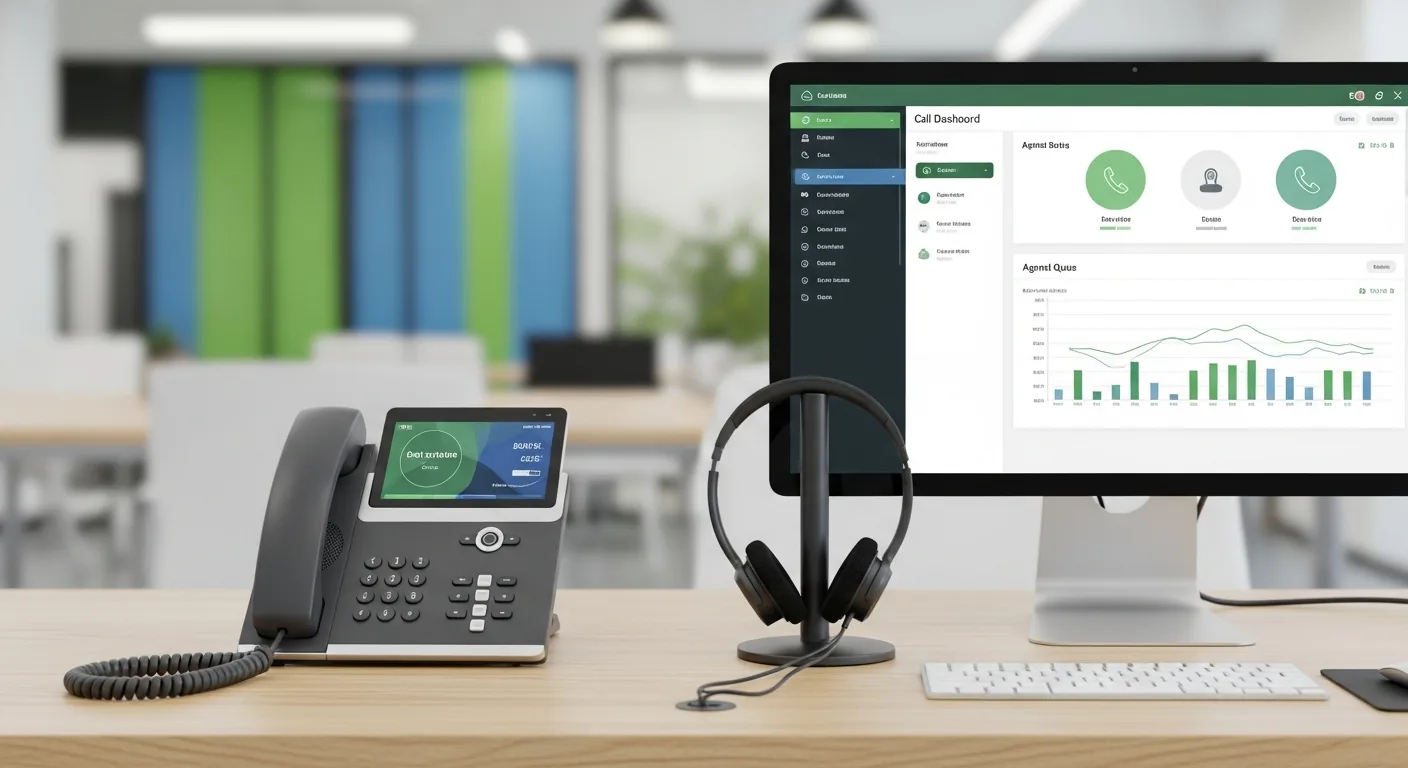
Most firms guess at their missed call rate, and the guess is always flattering. The number is knowable. Modern phone systems record every inbound call, whether it was answered, how long it rang first, and what hour it came in.
Pull one month. Sort the misses by hour of day. What comes back is usually two or three specific windows doing most of the damage, plus a slow bleed after five o'clock. That report is the entire diagnosis, and it costs nothing except turning on call analytics and looking at it once.
Then do the small-firm math honestly. Not the version with a giant number at the end. Take your real weekly missed count, assume some ordinary fraction of them were prospects rather than vendors and wrong numbers, and multiply by what a client is actually worth to you over the life of the relationship. Whatever that figure is, it's the budget you already have for solving this. You're just currently spending it on nothing.
The misses that never register as calls
There's a second category the reports don't always catch, and it's worth knowing about because it's invisible by design.
A caller reaches the auto attendant, listens to four options, none of which describes their situation, and hangs up during the menu. Your system logs that as an answered call. Technically true. Commercially, it's identical to a missed one.
Same with the caller who waits ninety seconds in a queue and gives up, and the one who gets transferred to an extension that rings out and lands in a voicemail box belonging to somebody on parental leave. All answered, all lost.
So when you pull the report, look at short-duration answered calls alongside the misses. Anything under about fifteen seconds is almost never a real conversation. It's somebody deciding your firm was too much work to reach.
The reputation cost nobody measures
The revenue side is easy to argue. The other half is harder to see and probably worse.
A person who calls a professional and gets voicemail forms an opinion in about four seconds. Not "they're busy." More like "this is what working with them will feel like." They were already nervous about the tax notice or the lawsuit or the letter from the bank. Now they've been ignored by the first firm they tried.
Most of them don't leave a message. They dial the next number. And you never learn any of it happened, which is the part that makes this problem so durable.
Fixes, roughly in order of return
Cover the queue before you cover anything else. When line one is busy, line two should ring somewhere useful, not nowhere. A ring group of three people beats a receptionist and a prayer.
Shorten the menu. Every layer of an auto attendant sheds callers. One level, plus a way out to a human, handles nearly every firm under fifty people.
Add an answering layer for the gaps. Lunch, evenings, the eleven weeks when volume triples. Something that picks up on the first ring, takes a name and a number, and texts your intake person beats voicemail on every measurable axis. The capabilities and the honest limits are covered in how AI receptionists capture leads.
Make callbacks a job, not a habit. Assign the returned-call list to a specific person with a specific window, morning and mid-afternoon. Missed calls become recovered calls only if somebody owns the list.
Then check the report again in thirty days. This is the step firms skip, and it's the only one that tells you whether the other four worked.
The thing that makes this fixable
Missed calls feel like a staffing problem, which is why firms treat them as unsolvable. Hiring is hard, the budget is what it is, and nobody's adding a second receptionist to catch the lunch hour.
But most of the misses aren't a staffing problem. They're a routing problem wearing a staffing costume. The calls arrive at a system that has exactly one destination and no plan for what happens when that destination is busy. Give the system somewhere else to send people and a large share of the loss disappears without adding a single salary.
That's an unglamorous conclusion for a problem this expensive. It's also the true one.
For the full picture of how to put a phone system together so this stops happening, start with our guide to business phone systems.