
VoIP vs Traditional Phone Systems for Professional Offices
The honest comparison between VoIP and traditional phone systems isn't close anymore, and the reason most professional offices haven't switched has nothing to do with the merits. It's that the old system still works. A phone system that still works is the hardest thing in the world to replace, because there's no crisis forcing the decision and no partner meeting where somebody says the words "our phones are fine, and that's costing us."
They are fine. They're also doing about a fifth of what the alternative does, for more money, and the gap gets wider every year you wait.
What each one actually is
A traditional setup runs voice over dedicated copper lines into a PBX box that lives in a closet in your office. That box handles extensions, transfers, and voicemail. It was expensive, it was installed by a technician, and changing anything about it involves calling that technician back.
VoIP converts voice into data and sends it over the internet connection you already pay for. The PBX still exists, it just lives in a data center and gets configured through a web page. Your phones plug into the network. Or there are no phones, and everyone uses an app.
That's the whole architectural difference, and nearly every practical difference below falls out of it.
The cost question, answered properly
Traditional systems front-load the money. Hardware, installation, a per-line monthly charge whether the line rings or not, a maintenance contract, and per-minute billing on long distance that somebody at your firm has definitely forgotten to check in years.
VoIP is a per-user subscription with no box to buy. Long distance is usually included. Adding a person costs one more seat, and removing one stops costing you at the end of the month rather than at the end of a contract term.
The comparison firms should actually run isn't the monthly bill. It's the total for the next five years, including the replacement PBX you'll be quoted for eventually, because that hardware ages out and the quote is never small. Pull your last twelve phone invoices and add up everything: lines, maintenance, long distance, the mystery regulatory fees. Most professional offices are surprised by their own number, and it's the only number in this comparison that's specific to you.
Features, where the gap becomes silly
Traditional phone systems do transfer, hold, conference, and voicemail. That's the list. Anything more is an add-on card, an add-on license, or a phone call to a vendor.
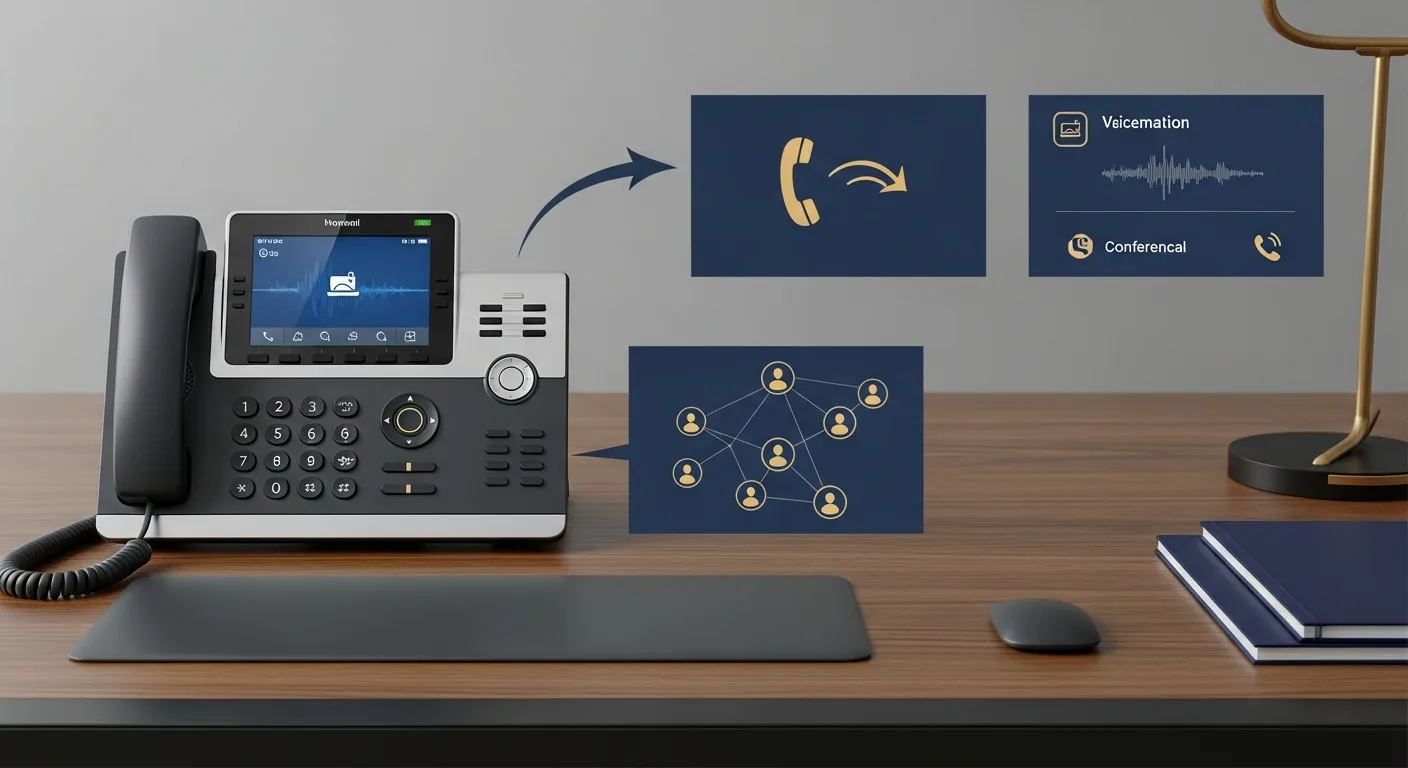
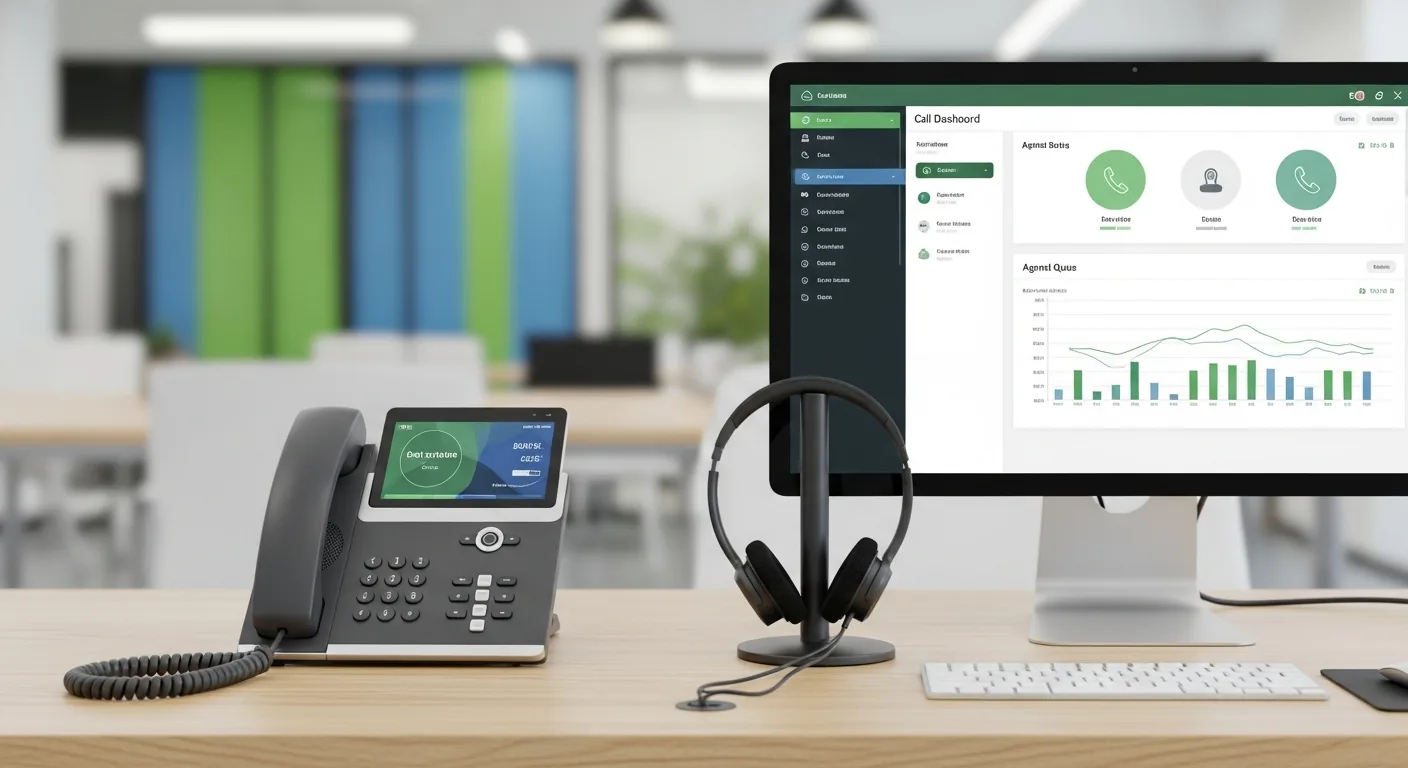
Standard VoIP plans include auto attendant routing, voicemail delivered to email with a transcript, call recording with searchable storage, mobile and desktop apps that carry your business number anywhere, video meetings, team messaging, presence indicators, call reporting, and hooks into your CRM or practice management system.
None of those are exotic. They're just the baseline now, which means a firm on copper isn't running an older phone system. It's running a phone system that can't do the things clients have come to expect, like getting a callback from a partner whose caller ID says the office rather than a cell.
Reliability, honestly
This is where traditional lines had a real argument, and it deserves to be stated fairly. Copper works when the power is out. Copper doesn't care about your internet connection. For decades that was decisive.
Two things changed. Business internet got good, and VoIP got smart about failure. A call on a decent connection is indistinguishable from a landline call now, and when the office loses power or connectivity, a cloud system fails over to mobile phones automatically. The caller hears a normal ring and never knows where the call landed. A traditional system in that scenario is a dead handset in a dark office, unless you own a generator.
The remaining risk is real but local. If your internet is genuinely unreliable, VoIP inherits that. The fix is a router with quality-of-service rules that prioritize voice, and in some offices a second connection for failover. Ask about the uptime guarantee too. 99.99% is the standard worth holding a provider to, and it should be in writing.
Adding a person, subtracting a person
A traditional line takes a phone call to the carrier, a scheduled visit, and a wait measured in days or weeks. Removing one means paying for it until your contract permits otherwise.
A VoIP seat takes about five minutes in a browser. For firms with seasonal headcount this is the entire argument by itself. An accounting practice bringing on preparers in January can have them answering the main line the morning they start, and can stop paying for those seats in May. The seasonal side of this is covered in more depth in VoIP for accounting firms.
Where copper simply has no answer
Remote and hybrid work is where the comparison stops being a comparison. Traditional systems assume everyone is sitting at a desk in one building, because that's the world they were designed for.
Your attorneys are at courthouses. Your CPAs are at client offices in January. Somebody works Fridays from home and has for four years. On a traditional system, all of those people are unreachable at their extension and calling clients from personal mobile numbers that will follow them for the rest of their careers.
On a cloud system, the extension is a person rather than a location. The app rings wherever they are, outbound calls show the firm's number, and voicemail lands in one place that somebody can cover during vacation.
Security, both directions
Traditional lines can be tapped, though realistically nobody is doing that to a six-person firm. VoIP has a different exposure: unencrypted voice traffic can be intercepted, and misconfigured systems get abused for toll fraud.
The mitigations are standard and any serious provider has them on by default. TLS for signaling, SRTP for the audio, encrypted storage for recordings and voicemail, role-based access so not everyone can pull every recording. What a cloud system offers that copper never could is the compliance layer around all of it: retention policies, access logs, and disclosure messages that play automatically.
The switch is smaller than the dread
The real objection is disruption, and it's a fair one. Nobody wants to be the partner who broke the phones in March.
But this migration is a well-worn path. You keep your numbers, porting typically takes 7 to 14 days, both systems can run in parallel while you test, and the cutover happens on a Friday afternoon when nothing is at stake. The full sequence is laid out in moving your phone system to the cloud, and the evaluation criteria for picking a provider are in what to look for in a business phone system.
If you want to settle the argument without committing to anything, run one. A free VoIP phone system trial on a spare number, with two or three people on it for a week, answers more questions than any comparison chart ever will. Especially the one that matters: does it sound right to your clients?
Which one, and when
If you're starting a firm, there's no case for traditional infrastructure. None. Skip the closet entirely.
If you're running an existing office on copper, the question is timing rather than direction. Good triggers: the PBX is nearing end of life, you're opening a second location, your team has gone hybrid and is improvising, or your monthly bill has quietly grown into something you'd rather not read aloud. Any of those and the moment is now, or more precisely, the moment is whichever quiet month comes next.
The complete picture, from features to contracts to what to demand on support, is in our guide to business phone systems.