
Live Receptionist, AI Receptionist, or Both?
The live receptionist versus AI receptionist question gets posed as a choice, and for most small firms it isn't one. The answer is almost always both, in a particular order, with the humans on the calls that need warmth and the software on the calls that were otherwise going to voicemail. Firms that pick one and commit to it usually end up either overpaying for coverage or losing calls at predictable hours.
What follows is the honest version of each option, including what each is bad at.
The in-house receptionist
The traditional arrangement, and the best experience money can buy when the call volume fits.
Someone sits at the front desk, knows your clients by voice, knows which partner is in a deposition and which one just wants to be told the caller is a vendor. They read tone. They handle the client who is upset before anyone else has to. They greet people who walk in. Over a few years they become one of the most valuable people in the firm and nobody notices until they take two weeks off.
The limits are arithmetic rather than criticism. One person answers one call. They eat lunch, they get sick, they take vacations, and eventually they leave for a job with a shorter commute. Every hour they aren't at the desk is an hour your firm doesn't answer its phone, unless something is behind them.
Cost is a salary plus benefits plus a workspace, and for a firm with light call volume it's often more capacity than the phones justify. For a firm with heavy volume, one is not enough.
The live answering service
Teams of trained operators answering on behalf of many businesses, following a script you provide, taking messages or transferring calls.
The good part is real. Actual humans, usually around the clock, billed by the minute or the call so you only pay for what happens. During a spike they absorb it without you hiring anyone. For practice areas where callers arrive upset, a person on the other end matters more than anything on a feature list.
The weak part is depth and consistency. The operator who answers has scripts for your firm and forty others, and they're reading yours for the first time. They can't answer anything not on the card. A caller who asks something specific gets a polite promise that someone will call back, which is a fine outcome once and a poor one repeatedly. And per-minute billing has a way of surprising firms in their busy season, exactly when volume is highest.
The AI receptionist
Software that answers, holds a short conversation, takes details, checks a calendar, and hands you a summary.
The advantages are structural. It answers every call at once, so simultaneous callers stop being a problem. It doesn't have a shift, so nights, weekends, and the lunch hour are covered by the same thing that covers Tuesday at ten. It's consistent, so the greeting is identical on call three hundred as on call one. And it bills as a flat monthly service rather than per minute, so the busy season doesn't produce a surprise invoice.
The limits deserve a straight statement. It won't build a relationship. It can't tell that a caller's voice has gone thin because they just got a notice from the IRS with a number on it they can't pay. Some callers, particularly older clients, will ask for a person immediately and should get one without a fight. And heavy accents, bad connections, and unusual requests still trip it up sometimes.
The full capability list, and the most common way firms misconfigure it, is in how AI receptionists capture leads.
The three shapes that actually work
Most small firms land in one of three configurations, and the right one depends less on budget than on who your callers are.
Humans in front, AI behind. Your receptionist answers during business hours, exactly as today. The AI catches the second simultaneous call, the lunch hour, and everything after five. Regular clients keep getting the person they know, and nothing reaches voicemail. This is the default recommendation for firms that already have a good front desk.
AI in front, humans on request. Every call gets answered instantly and screened, and anyone asking for a person gets transferred. This suits firms buried in vendor calls and solicitors, and firms where the front desk is really an office manager with six other jobs. It's also the cheapest way to guarantee nothing rings out.
AI screening, live service for the high-value calls. The AI handles routine traffic and existing-client questions, and hands new prospects to a live answering service for a warmer intake. You spend the expensive per-minute money only on the conversations worth it. More moving parts, but the economics are good.
The cost comparison, done honestly
Vendors love this comparison because the numbers favor them. Do it yourself instead, with your own figures.
A full-time receptionist is a salary, plus benefits, plus a desk, and they cover roughly forty hours out of the hundred and sixty-eight in a week. A live answering service bills for time used, which means the invoice is smallest in the months you need it least and largest in the season when you're already stretched. Software bills flat, which is predictable and mostly indifferent to volume.
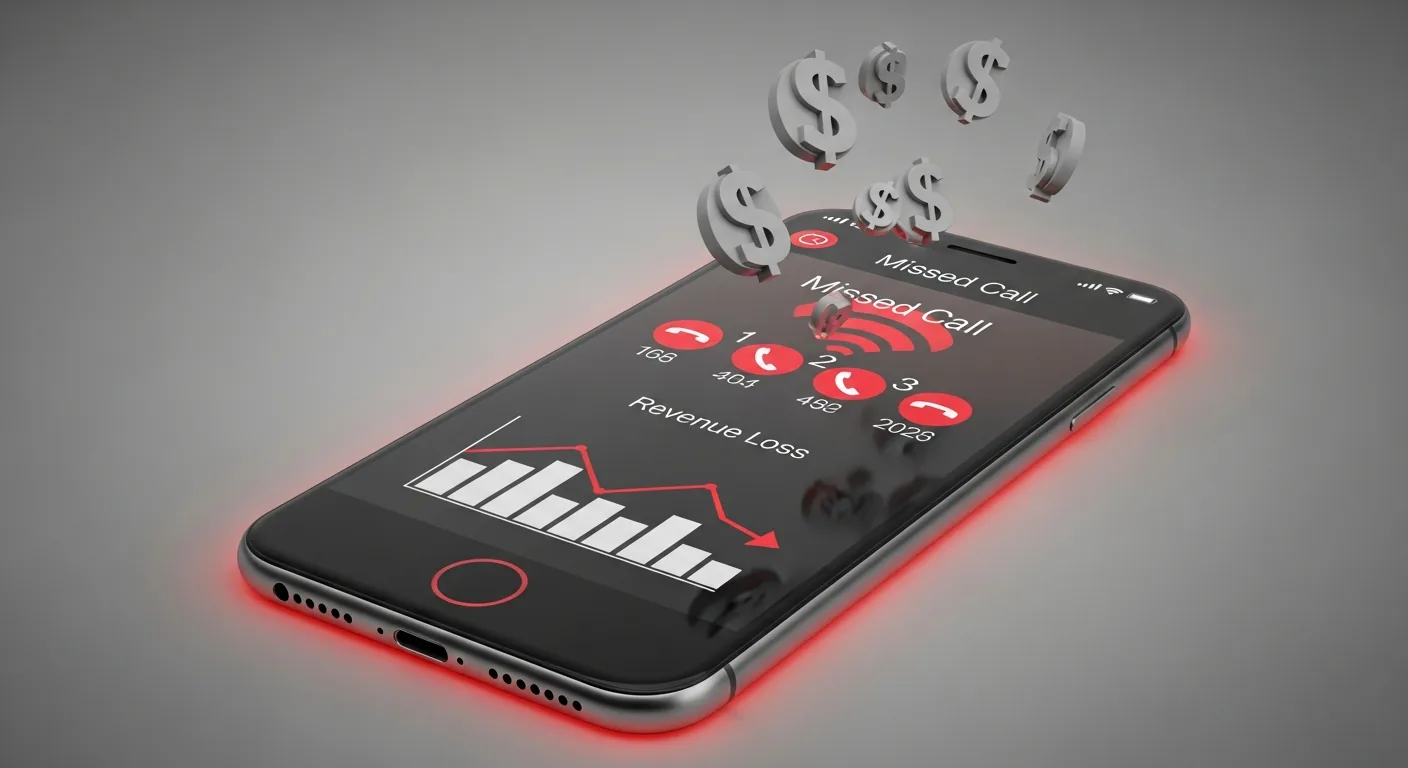
The comparison people skip is what the current arrangement already costs. Voicemail is free on the invoice and expensive everywhere else. Before deciding what to spend, work out what an unanswered lunch hour is worth against your own average client value, over a year. That number is the budget you're already spending, silently, on nothing.
Choosing between them without agonizing
Volume decides more than anything else. A firm taking a handful of calls a day needs one answering point and a backup for when it's occupied. A firm taking dozens needs something that handles simultaneous calls, and no single human does.
Client mix matters next. If your book skews older, or your practice area means people call in distress, a person should be the primary experience with software behind them. If your callers are business owners who'd rather book a slot than chat, AI in front is fine and often preferred.
Hours matter third. If you want coverage at 9pm on a Sunday, software is the only version of that a small firm can afford to run continuously.
And call complexity matters last. If most inbound calls are scheduling, routing, and basic questions, software handles them. If most calls require judgment in the first two minutes, they need a person quickly.
The mistake to avoid either way
Whatever you choose, the failure that ruins deployments isn't the technology. It's the routing behind it. An answering layer only handles the calls your phone system sends it, and plenty of firms sign up for coverage that never receives a call because the main line still rolls to the old voicemail box on the fourth ring.
Test it from an outside phone. During hours, while a line is busy, and at night. If all three land somewhere staffed, you've built it correctly. If they don't, the losses are quantified in why firms lose revenue to missed calls, and the night-and-weekend piece specifically is in after-hours call handling.
Where we'd start
For most firms under twenty people, keep the humans you have and put a virtual receptionist behind them for overflow, lunch, and after hours. It's the cheapest change that removes voicemail from your intake path entirely, and it doesn't ask your best receptionist to become less useful.
Revisit it in a year. The software side of this improves faster than the human side, and the balance keeps moving.
For the broader view of how answering fits into a firm's phone setup, start with our guide to business phone systems.