
AI Use Cases for Professional Services Firms That Pay for Themselves
The AI use cases that earn their keep in a professional services firm are dull to describe and easy to justify. Software reads documents. Software sorts transactions. Something answers the first message a prospect sends at 9pm. An hour of meeting turns into a page somebody will actually read. That's most of the list, and it has been most of the list for a couple of years.
The rest of what gets pitched at conferences is either a research project wearing a product name or a feature your team opens twice and never opens again.
There's a test that separates the two. A use case worth buying has a number attached to it before you sign anything, and you can name the person currently spending those hours. If you can't name them, you're buying a story.
Reading documents is still the first thing to fix
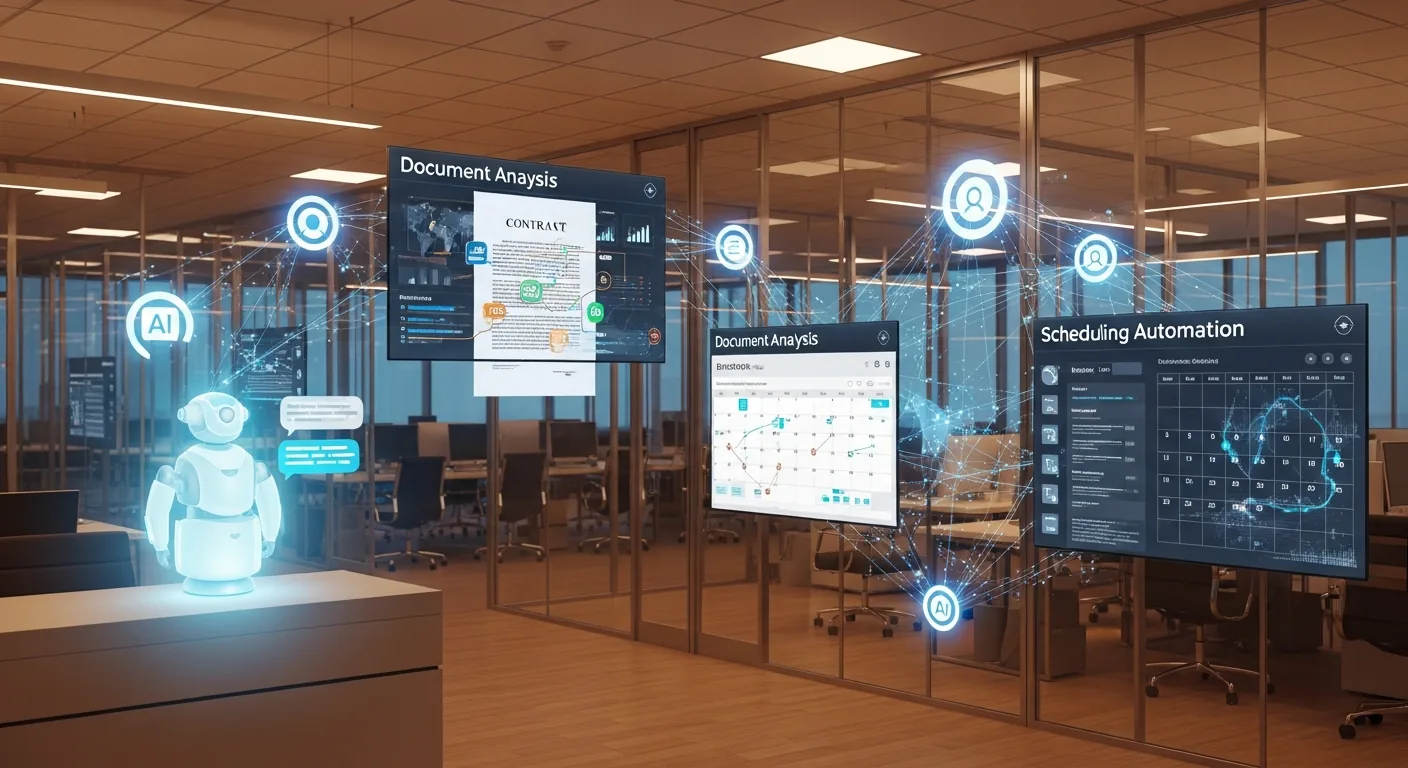
Accounting firms drown in paper that isn't paper. Brokerage statements that arrive as forty-page PDFs. Bank statements clients photograph at an angle. Receipts in a shoebox, then in a scanner, then in somebody's afternoon. Law firms have the same problem wearing a suit: contracts, filings, discovery, exhibits with dates and party names that have to be pulled out by hand.
The capability is identical underneath. Software reads the document, pulls the fields, maps them where they belong, and flags what it isn't confident about. A human reviews the flags instead of typing the whole thing.
This is the most mature thing on the list. Accuracy on standard document types is good and gets better when the tool learns from your corrections. The one thing that matters when you're shopping: buy something trained on your document types, not a general-purpose reader. A tool that has seen a hundred thousand 1099s will beat a clever generalist every time, and it will beat it worst on the weird ones, which are the ones you care about.
The hour a paralegal loses re-keying dates and party names out of a contract is the hour this pays back. Nobody misses that hour.
Transactions sort themselves now, and nobody wants to talk about it
Categorization, reconciliation matching, duplicate detection, anomaly flags. It's the least interesting slide in any deck and one of the two or three highest-return things a firm can automate. Modern tools handle the obvious majority of transactions and push the exceptions into a queue.
Your bookkeeper stops being a sorting machine and becomes a reviewer, which is what you thought you were hiring in the first place.
I've never seen a firm get excited about this at the demo. I've seen plenty get quietly religious about it by month three.
Somebody answers the first message
A prospect finds you at 9pm on a Tuesday, usually because something went wrong that day. An IRS notice. A partner dispute. A payroll problem they just discovered. They fill out a form or they call, and then they wait.
You don't need a study to know what happens next. They keep looking while they wait.
Automated intake closes that gap. The inquiry gets acknowledged in minutes, the basic questions get asked, and the information lands in your systems formatted instead of sitting in an inbox as a paragraph someone will retype tomorrow. The specifics of what works and what backfires are worth reading before you buy anything, and we went through them in detail in where AI client intake helps and where it fails.
Worth remembering that plenty of first contact still arrives by phone, especially from the clients with the most urgent problems. An intake system that only handles web forms is solving the easier half.
Meetings that write themselves down
Client calls, partner meetings, review sessions, prospect consultations. Somebody was supposed to take notes and mostly didn't, or took them and never circulated them.
Transcription plus summary plus action items is a solved problem now, and it's cheap. The value isn't the transcript, which nobody reads. It's that the three commitments made in minute forty of a call get written down instead of remembered incorrectly by two people with different versions.
Handle consent properly. Tell people they're being recorded, know your state's rules, and don't record anything privileged without a policy that says you can.
Where email help turns into email trouble
AI drafts a fine status update. It drafts a fine document request, a fine deadline reminder, a fine meeting confirmation. Those emails follow patterns and patterns are exactly what this technology is for.
The trouble starts when someone connects the draft directly to the send button. AI writes with confidence in a register that isn't yours, and the client who has been with you eleven years notices the day your tone changes. Keep a person between the machine and the outbox. It costs thirty seconds and it prevents the kind of email you spend a week apologizing for.
Reporting that changes a decision
For accounting and advisory work, the useful application isn't building prettier reports. It's compressing the part where someone assembles the numbers so they can spend the time on what the numbers mean.
Variance analysis, trend flags, anomaly detection across periods, a first-pass narrative on why gross margin moved. The accountant reviews and rewrites. What used to be two hours of assembly and one hour of thinking becomes twenty minutes of review and two hours of thinking, and the client gets the version with judgment in it.
The failure mode here is decoration. A firm buys analysis tooling, produces a monthly pack with fourteen charts, and nobody in the client's business changes a single decision because of it. Reporting exists to change a decision. If it doesn't, you've built furniture. When it's pointed at something real, financial statement analysis is one of the few AI applications a client will actually thank you for.
The knowledge locked in one person's head
Every firm has a partner who knows exactly how a particular client's situation works, an office manager who knows the workaround for the billing system, and a senior who has a template for everything. None of it is written down.
AI is unusually good at turning that into something searchable, mostly because it removes the part everyone hates, which is the writing. Transcripts of how your best person handles a situation become a draft procedure. Someone edits it for twenty minutes instead of writing it for three hours. That whole approach gets its own treatment in using AI for SOPs, and it's the use case I'd argue is most underrated relative to how boring it sounds.
What still doesn't work
AI does not spot the planning opportunity buried in an odd pattern across three years of returns. It doesn't know that a particular clause will cause a problem in year three because it has seen that fight before. It doesn't know your client's brother-in-law is on the board and that's why the conversation goes carefully.
It also has no real memory of context you haven't handed it, which means it's confidently wrong in exactly the situations where confidence is most expensive.
The firms getting the most out of this understand the split. Machine handles the process-shaped work. Humans handle the judgment, the relationships, and anything where being wrong costs a client. That division isn't temporary, and the vendors telling you otherwise are selling the next release, not this one.
Start where your team complains loudest, and check the wider picture in our guide to AI for accounting firms. If you want the view from further back on why this is reshaping who wins clients, how AI is changing accounting firms covers the ground.