AI Note Taking and Meeting Summaries for Professional Services
AI note taking and meeting summaries are the rare software purchase that starts paying for itself in the first week. Professional services firms run on meetings, and meetings leak. Someone walks out of a client call with a head full of action items and every intention of writing them down, and then the phone rings, and by Thursday half of what was promised has quietly evaporated. That's not a character flaw. It's a systems problem, and it happens to be one of the few problems AI is genuinely, boringly good at solving.
So let's skip the philosophy and get into how this works, what it costs you when it doesn't, and where the security landmines are buried.
The cost of remembering wrong
Partners and senior staff live in meetings. Client calls, strategy sessions, intake conversations, the Tuesday check-in that could've been an email. Every one of them generates commitments, and every undocumented commitment is a small bet that somebody's memory will hold under load.
It won't.
The failure modes are familiar to anyone who's worked at a firm for more than a month. The follow-up that never went out. Two people doing the same work because ownership was never written down. The client who mentions something from a call three weeks ago and gets a blank pause, which they notice, and remember. None of this shows up as a line item anywhere, which is exactly why it persists. A missed filing deadline gets a post-mortem. A vaguely disappointed client just gets quieter, and then one year they don't come back.
What the tools actually do
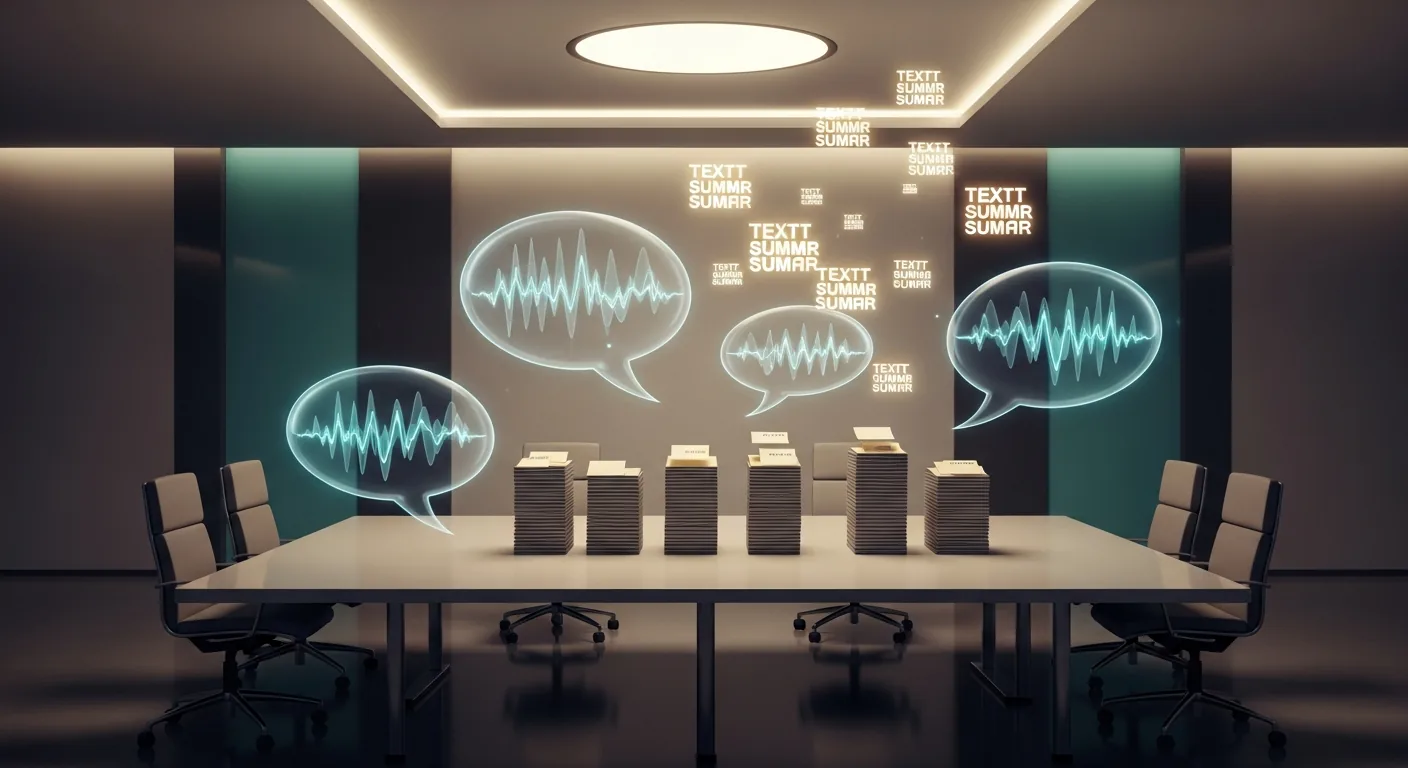
Modern meeting tools go well past transcription. The good ones capture who said what, which matters when a commitment needs an owner attached to it. They produce a structured summary minutes after the call ends, decisions here, open questions there. They pull action items out of the conversation, the "I'll send the revised engagement letter Friday" that used to live and die on a legal pad. Some will draft the follow-up email and queue it for your review.
None of it is magic and all of it is checkable, which is the right shape for professional work. The machine writes the first draft of the record and a human confirms it. The fifteen unbilled minutes after every call, the writing-up, the task creation, the follow-up email, mostly disappear. Multiply by every meeting in a week and you've found real hours hiding in plain sight.
Security questions come before feature questions
Here's the uncomfortable part. You're proposing to record privileged conversations and client financials, and those recordings have to live somewhere.
So before anyone compares summary quality, get the boring answers in writing. Encryption in transit and at rest. Retention windows you control, not the vendor's defaults. A contractual commitment that your recordings never train anyone's model. And consent handling that matches your jurisdictions, because plenty of states require all-party consent for recording, and a tool that surprises meeting participants is a trust problem before it's a legal one. Announce the recording out loud, every time, even where the law doesn't make you.
Retention deserves its own decision, separate from encryption. A recording you keep is a record that exists, and records that exist can be requested. Decide how long meeting audio and transcripts live, write the answer down, and make the tool enforce it. "Forever, by default, because nobody changed the setting" is not a retention policy anyone wants to explain later.
For law firms this diligence isn't optional, and the stakes reach beyond any one product category. Our piece on how law firms can use AI without risking client confidentiality walks through the wider vetting logic, and most of it applies just as well to a CPA's client list as to a litigator's.
Where firms feel the difference first
Intake calls, for one. The person running intake stops splitting attention between building rapport and scribbling notes. The summary becomes the first artifact in the client file, and the details a prospect shared once never have to be asked for twice. (Asking twice is how prospects learn you weren't listening the first time.)
Planning sessions, for another. Say a 45-minute tax planning call produces six decisions and four follow-ups. Reconstructed from memory the next morning, it produces four decisions and two follow-ups, and nobody knows which ones went missing. Reviewed against an AI summary, the partner spends five minutes confirming instead of an hour reconstructing. Same meeting, different firm.
Case strategy sessions, where the associate who used to be the designated scribe gets to participate instead. And internal check-ins, which everyone assumes are too small to matter, right up until someone asks what the team decided about a file two Tuesdays ago and, for once, there's an actual answer.
The objections, taken seriously
Will clients mind being recorded? Some will, at first. Transparency fixes most of it. You're recording so that nothing they tell you gets lost, which is a service to them, and most clients hear it that way when it's said plainly. The ones who decline get a human notetaker and their wish respected without drama.
Will the AI get things wrong? Occasionally, yes. It'll mishear a term of art or hang a sentence on the wrong voice. That's why the summary stays a draft until a human reviews it. The review takes minutes. The old alternative, reconstruction from memory, took longer and was wrong more often. We just never audited it, so it felt reliable.
Is it worth the money? The subscription for these tools is a rounding error next to the professional time they recover. Run your own math on one week of your own calendar and the question mostly answers itself.
Don't forget the phone
A quiet irony: firms will buy software to document every scheduled meeting while the unscheduled ones, the phone calls, keep vanishing into thin air. The client who calls with something important at 4:50pm gets whoever picks up, and the record of that call is whatever that person remembers to write down. Often nothing.
The same capture-everything logic applies there. An AI virtual receptionist answers when your people can't, takes the message in full instead of in fragments, and hands you a searchable record instead of a pink while-you-were-out slip. Because the phone call where a client first mentions selling the business deserves the same documentation standard as the meeting where you plan it.
Run a pilot, then ration it
Don't roll this out firm-wide on a Monday morning. Pick one team with a heavy meeting load and a documented history of dropped follow-ups. Run it for 30 days. Measure documentation time and follow-through, and collect the complaints, because there will be complaints and some of them will be right.
Then let demand do the marketing. The pilot team won't give the tool back, and everyone else will start asking when they get access. Adoption by envy beats adoption by memo.
Two pieces of housekeeping before you start. Add the tool to your firm's AI policy, with its retention settings and consent script spelled out, so the rules exist before the habits do. And if you want the bigger map of where meeting capture sits in the toolkit, our guide to AI for law firms lays out the whole landscape.