
How to Reduce Employee Tech Friction
Your team isn't billing fewer hours because they're lazy. They're billing fewer hours because they're fighting the tools. Employee tech friction, the daily drag of extra logins, re-keyed data, and machines that need a minute to think, is the quietest expense in a professional service firm, and reducing it is some of the cheapest capacity you'll ever buy. No hiring. No new service line. Just removing the sand from gears you already own.
Friction never looks like an emergency
That's exactly what makes it expensive. A server crash gets fixed the same day because it's loud. Friction is quiet. It's the eight systems that each demand their own password every morning, with eight different expiration policies. It's the bank statement that gets keyed into the practice management system and then keyed again into billing, by the same person, in the same hour. It's the laptop that takes five minutes to boot, the document search that takes ten minutes to find a file whose name you know, the approval chain that wants three signatures on a routine task because someone got burned once in 2019.
Each of these steals two or three minutes. None of them ever files a complaint. Multiply by dozens of occurrences a day across everyone you employ and you've got a payroll line nobody can see.
The worst part is that people adapt. After six months, nobody even calls it friction anymore. The double entry is just the job. The morning login gauntlet is just the morning. Your most conscientious people build elaborate personal workarounds and feel quietly proud of them, which means your best employees are spending their ingenuity compensating for your systems. You're paying professional rates for that ingenuity. It could be doing professional work.
Measure it before you fix it
Ask the team to run a friction log for one week. Every technology delay, what happened, roughly how long it took. That's the whole exercise. People grumble about it and then get weirdly invested, because it's the first time anyone official has asked.
You'll get a list, and then you can do honest hypothetical math on it. Say the log shows a conservative 30 minutes per person per day. For a ten-person firm billing around 200 dollars an hour, that's 50 potential billable hours evaporating every week, and you can run the annual number yourself. Sit down first. Even if only a third of that time is realistically recoverable, the fixes below fund themselves several times over, which is a sentence you can't say about most technology spending.
Fix what touches everyone daily
Not all friction deserves equal attention. Start with the irritations that hit the most people, the most times per day.
Single sign-on is usually first. If people log into more than three systems daily, put one login in front of all of them. Password reset tickets mostly disappear, mornings start faster, and there's a security bonus hiding in it: one switch to flip when someone leaves, instead of a scavenger hunt.
Killing the re-keying is second, and it's the big one. Map every place data moves between systems by hand, then automate those hops. This is precisely the job of practice management integration: the intake form fills the CRM, the CRM fills the engagement, the engagement fills billing, and no human plays courier in between. Every manual hop you delete removes both the minutes and the typos, and the typos were costing more than the minutes.
Hardware comes third. Running a computer until it physically dies feels frugal and is the opposite. Do the hypothetical math again: if a 1,500 dollar machine gives a biller back even 20 minutes a day, it pays for itself within a quarter. And the old machine was going to die in March anyway. They always die in March.
One tool per job is fourth. Three people on three different project management platforms is a translation problem you're paying for daily, and it compounds across locations, where mismatched tools quietly harden into mismatched processes.
And fix the search. If finding a document requires knowing who saved it, when, and what mood they were in, you don't have a filing system, you have an archaeology site. A naming convention and a folder structure that matches how the firm actually thinks, applied from today forward without trying to repair the past, takes one meeting to agree on. Then people stop asking each other where things are, which was secretly one of the biggest interruption sources in the building.
The complaints are the map
The people living with friction know exactly where it is. Give them somewhere to say so: a monthly pulse survey, a standing channel for tech gripes, an agenda line in team meetings. When three people say the document system is slow, that's data. Investigate it like data. The fix might be a configuration change, a bandwidth upgrade, or a tool that needs replacing, but you won't know until someone treats the complaint as a report instead of a mood.
And pay close attention to shadow IT. When staff start moving client files through personal Dropbox accounts or texting each other on consumer apps, they're not being reckless for sport. They're routing around a tool that failed them. Shadow IT is a symptom. Treat the disease, then close the workaround, in that order. Close the workaround first and they'll just find a quieter one.
Sometimes the tool is fine and the training never happened
A decent share of friction is a feature nobody was shown. Firms deploy serious software, train nobody, and the team uses whatever they discovered in week one while hand-cranking everything else the tool would happily do for them. The keyboard shortcut exists. The bulk action exists. The template exists. Nobody knows.
A quarterly hour on your core tools is boring and pays absurdly well. Most vendors will run the session free if you ask, since trained customers renew.
New hires deserve special mention. The person who joins in January learns your tools in the middle of the busiest season, from whoever has the least time to teach them. Front-load the training before the crunch, or accept that their improvised habits will be the permanent kind.
Make it a rhythm, not a project
Friction grows back. Every new tool, new hire, and new workaround plants some. So build the weeding into the calendar. Monthly, skim the support tickets for patterns, because repeated tickets are systemic friction wearing a disguise. Quarterly, rerun a light version of the friction survey. Annually, fold the whole question into a full technology audit, so the hardware ages and license waste get counted in the same pass.
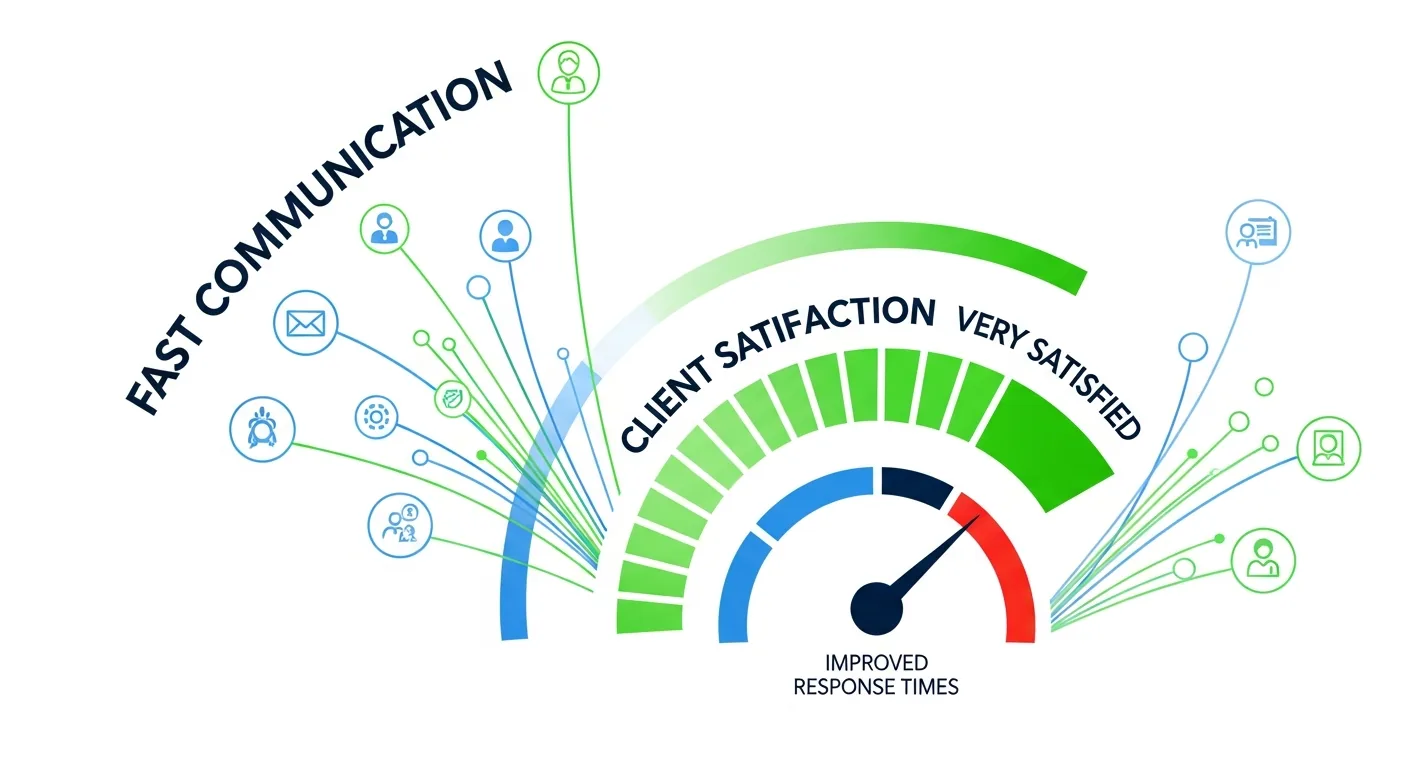
The payoff lands somewhere you might not expect: your clients. Internal friction is externally visible. A team wrestling its own systems answers slower, and the client experiences your tooling as slow responses without ever knowing why. There's a longer version of that argument in our firm operations guide, but the short version is that speed is an operations output, and friction is its largest input.
Start with one question at your next team meeting. What slows you down? Then be quiet and take notes. The answers are your roadmap, already ranked.