How to Protect Client Financial Data From Phishing and Ransomware
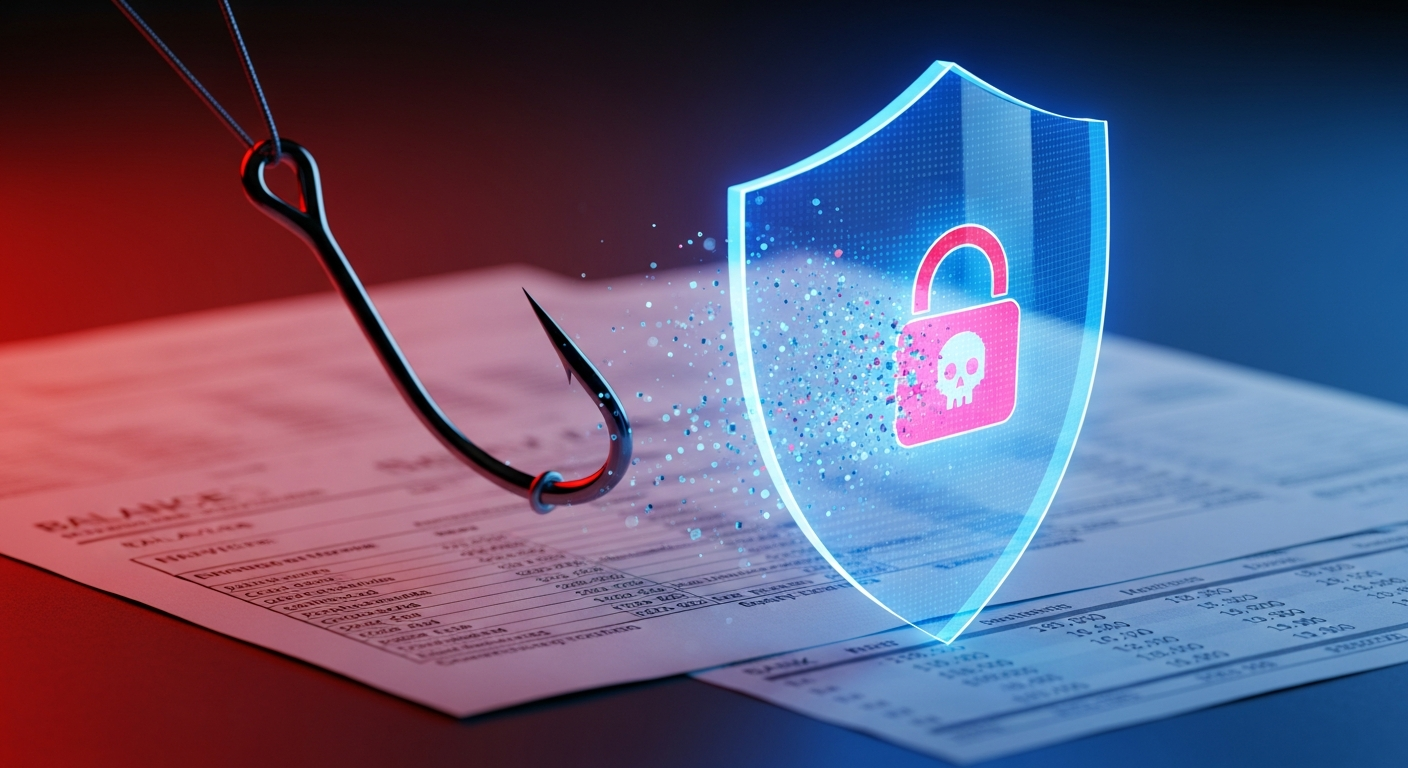
Two threats dominate the cybersecurity landscape for professional services firms: phishing and ransomware. They are often connected. Phishing is typically how ransomware gets in. And when ransomware hits a firm that handles client financial data, the consequences go far beyond a few days of downtime.
We are talking about exposed tax returns, compromised bank account details, leaked Social Security numbers, and the kind of trust damage that takes years to rebuild. If it can be rebuilt at all.
Understanding the Phishing Threat
Phishing has evolved. The poorly written emails from foreign princes are still out there, but they are not what should worry you. The attacks targeting professional firms are surgically precise.
**Spear phishing** targets specific individuals at your firm. The attacker researches your team on LinkedIn, your website, and social media. They know your partner names, your clients, and your processes. The email looks like it comes from a real client requesting a wire transfer, or from a colleague sharing a document.
**Business email compromise (BEC)** takes it further. The attacker either compromises a real email account or creates a nearly identical domain (think firm-name.com vs firn-name.com). They insert themselves into ongoing email conversations, often waiting weeks before making their move with a fraudulent payment request.
**Credential harvesting** uses fake login pages for Microsoft 365, Google Workspace, Dropbox, or your practice management platform. The page looks identical to the real thing. You enter your credentials, and the attacker has them. Even MFA can be bypassed with sophisticated enough techniques.
Understanding the Ransomware Threat
Ransomware encrypts your files and demands payment for the decryption key. Modern ransomware variants often include "double extortion," where attackers also steal data before encrypting it and threaten to publish it if you do not pay.
For professional firms, the implications are severe:
- Client data published on the dark web
- Regulatory penalties for failing to protect sensitive information
- Malpractice liability and potential loss of licensure
- Business interruption during tax season or litigation deadlines
- Reputational damage that drives clients to other firms
The average ransomware payment for small businesses exceeded $100,000 in 2025, and that does not include downtime costs, forensic investigation fees, legal expenses, and client notification costs.
Technical Defenses Against Phishing
**Advanced email filtering.** Go beyond basic spam filters. Modern email security solutions use machine learning to detect anomalies in sender behavior, analyze link destinations before delivery, and detonate attachments in sandboxed environments to check for malicious payloads.
**DMARC enforcement.** Configure DMARC, DKIM, and SPF records for your domain at enforcement level. This prevents attackers from sending emails that appear to come from your firm's domain. It also gives you visibility into who is sending email on your behalf.
**URL rewriting and time-of-click analysis.** Some links are clean when the email arrives but become malicious later. URL rewriting services check links at the time of click, not just at delivery. This catches delayed-activation attacks.
**Browser isolation.** For high-risk users (partners, finance staff), browser isolation technology renders web content on a remote server and streams a safe visual representation to the user. Even if they click a malicious link, the attack cannot reach their local device.
Technical Defenses Against Ransomware
**Endpoint detection and response (EDR).** Modern ransomware uses techniques that traditional antivirus misses. EDR monitors behavior patterns and can stop ransomware before it finishes encrypting files.
**Network segmentation.** If ransomware gets a foothold on one machine, segmentation prevents it from spreading across your entire network. Keep client data on segmented networks with strict access controls.
**Immutable backups.** This is your last line of defense. Immutable backups cannot be modified or deleted, even by an administrator (or an attacker with admin credentials). Store them in a separate environment with different credentials.
**Patch management.** Many ransomware attacks exploit known vulnerabilities that already have patches available. Automate patching where possible and have a process for emergency patches within 48 hours.
**Application whitelisting.** Only allow approved applications to run on your systems. This prevents ransomware executables from launching even if they make it onto a device.
Process Controls
Technology alone is not enough. You need processes that make it harder for phishing and ransomware to succeed.
**Wire transfer verification.** Any request to send money or change payment details must be verified by phone using a known number (not the number in the email). This single policy has prevented millions of dollars in BEC fraud.
**Email classification.** Tag emails from external sources with a visible warning banner. This simple visual cue helps staff think twice before trusting messages that appear to come from internal sources.
**Principle of least privilege.** Users should only have access to the data they need. If ransomware compromises a seasonal tax preparer's account, it should not be able to reach partner-level data or financial systems.
**Incident reporting.** Create a culture where reporting suspicious emails is encouraged, not punished. Every reported phishing attempt is intelligence that helps protect the whole firm.
Employee Training
Your team is simultaneously your greatest vulnerability and your strongest defense.
**Regular phishing simulations.** Run monthly simulated phishing campaigns. Vary the scenarios: fake client requests, impersonated vendors, social engineering calls. Track results and provide targeted training for those who struggle.
**Just-in-time training.** When someone clicks a simulated phishing link, immediately show them what they missed and how to spot similar attacks. This contextual learning is far more effective than annual presentations.
**Role-specific training.** Finance staff need extra training on BEC and wire fraud. Partners need training on executive impersonation. IT staff need training on social engineering tactics targeting help desks.
Building these habits into your firm's DNA is what creating a security culture is all about.
Incident Response Preparation
Despite your best efforts, an incident may still occur. Being prepared dramatically reduces the damage.
**Have a plan.** A written breach response plan that everyone knows and has practiced. Not sitting in a drawer gathering dust.
**Know your first 24 hours.** The initial response window is critical. Read about what to do in the first 24 hours after a breach so you are not scrambling when it matters most.
**Maintain relationships.** Have a cyber insurance policy in place, a forensic investigation firm on retainer, and legal counsel identified before you need them. During an active incident is the worst time to start shopping for help.
**Test your backups.** A backup you have never tested is a backup you cannot trust. Perform quarterly restore tests to verify your data can be recovered.
The Cost of Inaction
The firms that decide to "deal with security later" are playing a dangerous game. The average cost of a data breach for small businesses exceeded $150,000 in 2025. For professional services firms handling sensitive client data, the number is often higher when you factor in:
- Client notification and credit monitoring costs
- Regulatory fines
- Legal defense costs
- Lost revenue from client attrition
- Reputational damage
Compare that to the cost of implementing proper security controls. The math is straightforward.
For a comprehensive approach to protecting your firm, visit our cybersecurity guide for professional services. And review the cybersecurity essentials for accounting firms or law firms for industry-specific guidance.