What Fractional IT Management Looks Like for a Small Firm
What Fractional IT Management Looks Like for a Small Firm
There is an awkward middle ground that many small professional services firms find themselves in. You have outgrown the point where "whoever is good with computers" can manage your technology. But you are not large enough to justify hiring a full-time IT director at $120,000 to $180,000 per year plus benefits. You need strategic technology leadership, but you do not need it 40 hours a week.
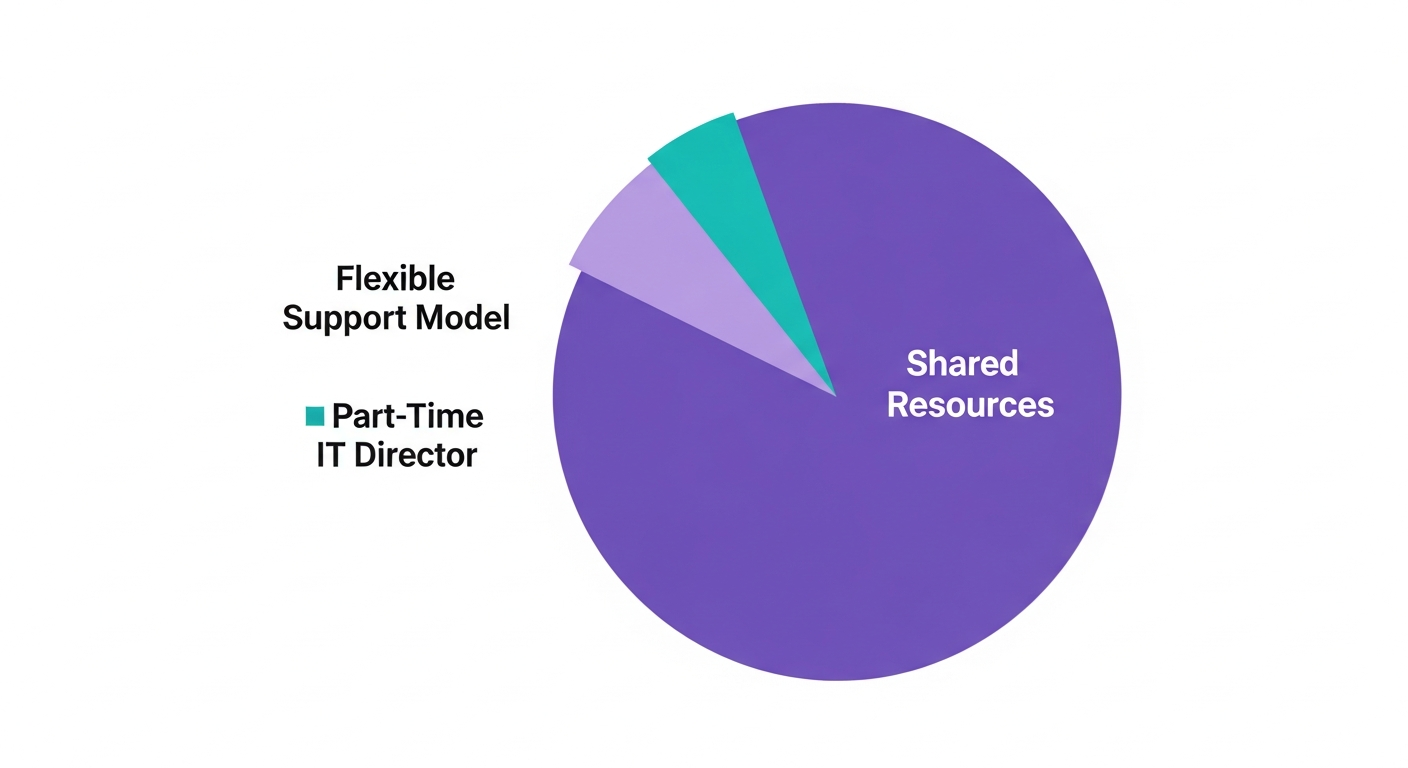
This is exactly the gap that fractional IT management fills. It is a model where you get experienced IT leadership on a part-time or contracted basis, typically for a fraction of the cost of a full-time hire. Think of it as sharing a seasoned IT director with several other firms, each getting the strategic guidance they need without bearing the full cost alone.
What Fractional IT Management Is (and Is Not)
Fractional IT management is not the same as outsourced help desk support. Help desk support is reactive. Someone calls when something breaks, and a technician fixes it. That is important, but it is operational, not strategic.
Fractional IT management operates at a higher level. A fractional IT manager (sometimes called a virtual CIO or vCIO) focuses on technology strategy, planning, vendor management, budgeting, and risk assessment. They think about where your technology is today, where it needs to be in two years, and how to get there efficiently.
Here is what that looks like in practice:
**Technology roadmap development.** A fractional IT manager assesses your current technology environment and creates a prioritized plan for improvements. This is not a wish list. It is a practical roadmap with timelines, budgets, and clear justifications for each recommendation.
**Vendor management and evaluation.** Small firms deal with multiple technology vendors: internet providers, software companies, hardware suppliers, managed service providers, and more. A fractional IT manager evaluates these relationships, negotiates contracts, holds vendors accountable, and recommends changes when a vendor is not delivering value.
**Budget planning and cost optimization.** Technology spending can spiral without oversight. A fractional IT manager helps you create and manage a technology budget, identifies areas where you are overspending, and ensures that investments are aligned with your firm's priorities.
**Security oversight.** While they may not configure firewalls personally, a fractional IT manager ensures that your security posture is appropriate for your firm's risk profile. They review security policies, evaluate compliance requirements, and make sure your technical team or managed service provider is implementing adequate protections.
**Project management.** When you undertake a significant technology project, like migrating to a new practice management system, upgrading your network, or moving to the cloud, a fractional IT manager oversees the project. They coordinate vendors, manage timelines, communicate with stakeholders, and make sure the project stays on track.
**Staff and training coordination.** A fractional IT manager identifies training needs, recommends learning resources, and ensures that your team can use your technology effectively. They also help with technology aspects of hiring and onboarding, making sure new employees are set up properly from day one.
How the Engagement Typically Works
Fractional IT management engagements vary, but there are common patterns:
**Time commitment.** Most fractional IT managers work with each client between 5 and 20 hours per month, depending on the firm's size and complexity. Some months may be heavier (during a major project or after a security incident), and some months lighter. The flexibility is a key benefit of the model.
**Communication cadence.** Expect regular check-ins, typically weekly or biweekly, plus monthly or quarterly strategic reviews. Your fractional IT manager should be accessible between scheduled meetings for urgent questions or decisions that cannot wait.
**Working with your existing team.** A fractional IT manager does not replace your managed service provider or internal IT staff. They work alongside them, providing the strategic direction that tactical teams need. Think of them as the architect who designs the building while the contractors do the construction.
**Deliverables.** You should expect tangible outputs: technology assessments, budget recommendations, project plans, vendor evaluations, and security reviews. These are not just conversations. They are documented, actionable plans that your firm can reference and execute.
When Does It Make Sense?
Fractional IT management makes the most sense for firms that meet several criteria:
You have between 10 and 100 employees. Below 10, your technology needs are usually simple enough to manage with a good managed service provider. Above 100, you likely need a full-time IT leader. The sweet spot for fractional management is firms that have outgrown simple but have not yet reached the scale that justifies a dedicated executive.
Your technology is creating friction. If your team regularly complains about technology, if systems go down too often, if you are not sure your data is secure, or if you feel like you are spending too much without getting enough value, a fractional IT manager can diagnose and address these issues.
You are planning growth or change. If your firm is growing, opening new offices, merging with another practice, or undergoing any significant change, a fractional IT manager can ensure that your technology supports the transition rather than hindering it.
You lack a technology strategy. If your approach to technology has been "buy things when they break and hope for the best," a fractional IT manager brings the strategic thinking that turns reactive spending into proactive investment.
What to Expect in Terms of Cost
Fractional IT management typically costs between $2,000 and $8,000 per month, depending on the scope of the engagement and the experience of the manager. Compare that to the fully loaded cost of a full-time IT director, which can easily exceed $200,000 annually when you factor in salary, benefits, training, and management overhead.
The cost should be predictable. Most fractional IT managers work on a monthly retainer with a defined scope of services. If the scope changes significantly, the retainer adjusts. You should not be receiving surprise invoices.
Consider the return on investment as well. A fractional IT manager who identifies $20,000 in wasted software licenses, prevents a $50,000 data breach through better security practices, or saves your team 100 hours of productivity per year through better systems has likely paid for themselves several times over.
How to Find the Right Person
Finding the right fractional IT manager requires some due diligence:
**Look for industry experience.** A fractional IT manager who has worked with other professional services firms will understand your workflows, compliance requirements, and common technology challenges. Ask for references from firms similar to yours.
**Evaluate communication skills.** The best technical minds are not always the best communicators. Your fractional IT manager needs to translate technical concepts into business language that partners and leadership can understand and act on. If they cannot explain a recommendation without drowning you in jargon, they are not the right fit.
**Check for vendor independence.** Some fractional IT managers have financial relationships with specific vendors and will steer you toward those products regardless of fit. Look for someone who evaluates options objectively and recommends what is best for your firm, not what earns them the biggest referral fee.
**Assess their approach.** A good fractional IT manager starts by listening and assessing before making recommendations. If someone starts selling you solutions before they understand your environment, your workflows, and your priorities, proceed with caution.
For a broader perspective on technology management for professional firms, see our guide to IT Management for Professional Firms. If you want to evaluate your firm's current technology position before engaging a fractional IT manager, our Simple IT Checklist for Growing Professional Firms provides a structured framework for that assessment. And for help choosing the right tools, read our guide on how to build a technology stack for professional services.
Making the Most of the Relationship
Once you have engaged a fractional IT manager, set them up for success. Give them access to your current technology documentation (or let them create it if it does not exist). Introduce them to your managed service provider and key vendors. Include them in relevant leadership discussions. And be honest about your budget constraints and priorities.
The firms that get the most value from fractional IT management treat it as a genuine partnership, not a vendor relationship. When your fractional IT manager understands your business goals, not just your technology challenges, they can make recommendations that serve both.
Technology leadership does not have to come with a six-figure salary. For small professional services firms, fractional IT management delivers the strategic guidance you need at a price point that makes sense. The key is finding the right person and building the right relationship.