AI for SOPs: Turn Tribal Knowledge Into Repeatable Processes
Every professional services firm has a dirty secret: most of their critical processes exist only in people's heads. The partner who knows exactly how to handle a specific type of client engagement. The office manager who knows the workaround for the billing system's quirks. The senior associate who has perfected a workflow that nobody else can replicate.
This is tribal knowledge, and it is both your firm's greatest asset and its biggest vulnerability. When that partner takes a vacation, things slow down. When that office manager retires, institutional knowledge walks out the door. When that senior associate leaves for another firm, their perfected workflows leave with them.
Standard operating procedures (SOPs) are the traditional solution. Document everything so anyone can follow the process. The problem is that writing SOPs is tedious, keeping them updated is even more tedious, and most firms do not have the time or discipline to do either.
AI changes that equation dramatically.
How AI Helps Capture Tribal Knowledge
The traditional SOP creation process goes like this: someone (usually the person who does not actually do the work) interviews the expert, writes up the process, reviews it with the expert, revises it, and publishes it. Three months later, the process changes and the SOP is outdated.
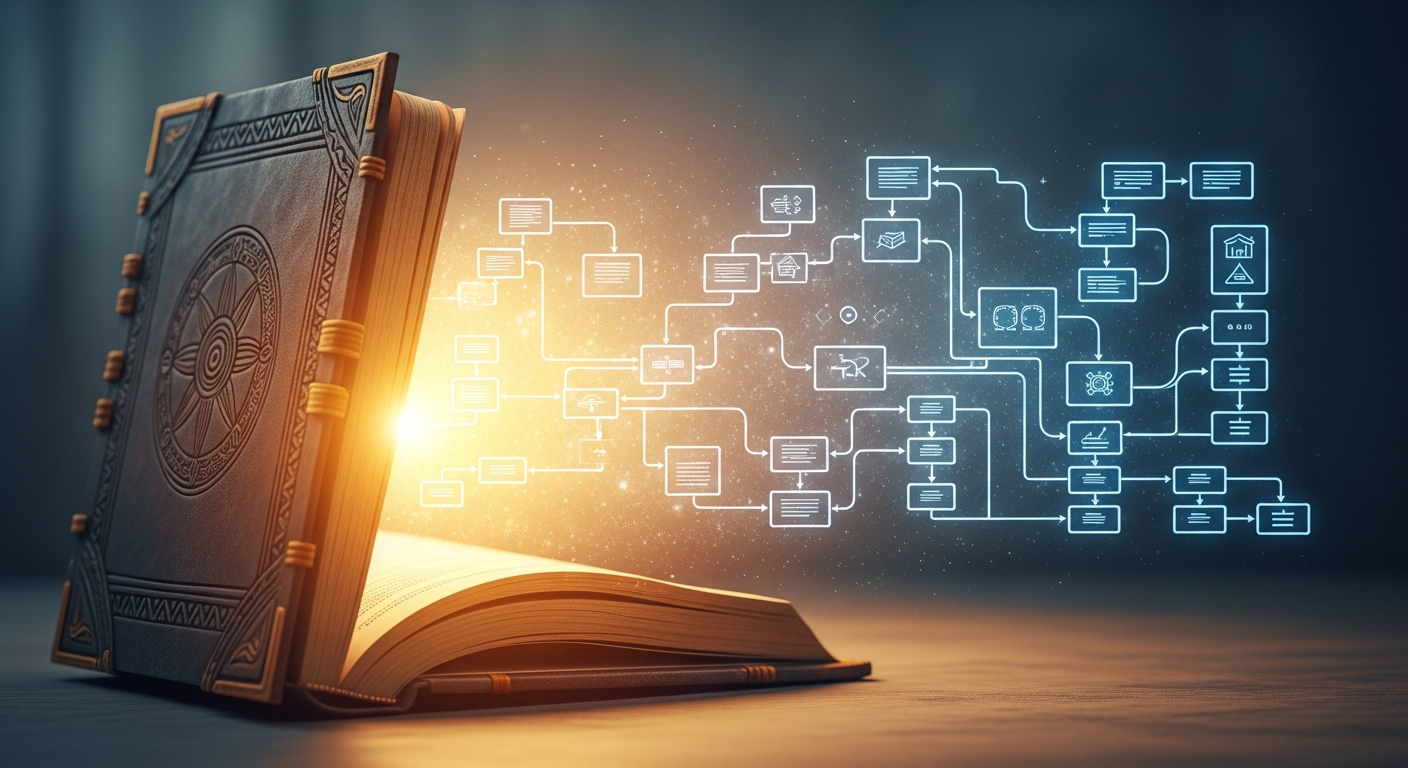
AI offers a better approach. Instead of formal interviews and manual documentation, AI can observe and capture processes as they happen.
**Meeting and conversation capture.** When your team discusses how to handle a specific situation, AI meeting tools can transcribe the conversation, extract the key process steps, and draft an SOP from the discussion. Instead of asking experts to stop and document their knowledge, you capture it while they are doing their actual work.
**Email and communication mining.** Your team's email history contains a wealth of process knowledge. How does your firm handle a client dispute? Search the email archives. AI can analyze these communications, identify patterns, and extract repeatable processes. The way your best people handle situations becomes the template for everyone.
**Workflow observation.** Some AI tools can observe digital workflows (not in a surveillance way, in a process-mining way) and map out the steps people take to complete tasks. This reveals the actual process, which often differs significantly from what is documented or what management thinks happens.
From Capture to Usable SOPs
Raw captured knowledge needs refinement to become useful SOPs. This is where AI's natural language processing capabilities shine.
AI can take a jumbled conversation transcript and organize it into a step-by-step process. It can identify decision points ("if the client's revenue exceeds $X, do Y; otherwise, do Z") and format them clearly. It can flag gaps where the process is ambiguous and prompt someone to clarify.
The result is a first draft that is 70-80% complete. A team member reviews it, fills in the gaps, and you have a usable SOP in a fraction of the time it would take to create one from scratch.
For accounting firms, this might mean capturing how your top tax preparer handles complex returns, how your advisory team structures client presentations, or how your admin team manages the annual engagement letter renewal process.
Making SOPs Searchable and Accessible
Having documented SOPs is only useful if people can find and use them. Most firms have SOPs buried in shared drives, wikis, or binders that nobody looks at. This is where AI-powered knowledge search comes in.
Instead of navigating folder structures or searching by document title, team members can ask questions in natural language. "How do we handle a client who wants to switch from monthly to quarterly bookkeeping?" The AI searches your SOPs and delivers the relevant process steps.
This is particularly powerful for onboarding new team members. Instead of shadowing a senior person for weeks, the new hire can access the firm's collective knowledge on demand. They still need training and mentorship, but the AI fills the gaps between training sessions. For a deeper dive into this capability, read our article on AI for internal knowledge search.
Keeping SOPs Current
The biggest failure point for SOPs is maintenance. Processes change, tools get updated, regulations shift, but the documentation stays frozen in time. Outdated SOPs are worse than no SOPs because people follow them and get wrong results.
AI can help here too. When someone deviates from a documented process, AI can flag it. If multiple people deviate in the same way, it probably means the process has changed and the SOP needs updating. AI can draft the update based on the observed changes, and a team member can approve it.
Some AI systems can also monitor for external changes that should trigger SOP updates. New tax regulations, software updates, or compliance requirements can automatically flag affected SOPs for review.
Practical Implementation for Small Firms
If you are a small firm without a dedicated operations or knowledge management team, here is a practical approach:
**Start with your highest-risk processes.** What happens when your most knowledgeable person is unavailable? Those are the processes to document first. If the answer to "what happens if Sarah is out for two weeks" is "we are in trouble," then Sarah's processes need AI-assisted documentation now.
**Use AI meeting tools routinely.** Start recording and transcribing team meetings, client calls (with consent), and internal training sessions. The AI captures knowledge as a byproduct of normal work. No extra effort required.
**Create a simple knowledge base.** You do not need fancy software. A well-organized shared drive with AI-generated SOPs is a great start. As you accumulate more documents, you can invest in AI-powered search to make them accessible.
**Assign SOP ownership.** Every SOP should have an owner who is responsible for keeping it current. AI can remind owners to review their SOPs quarterly and flag potential updates based on observed changes.
The Cultural Challenge
The biggest obstacle to capturing tribal knowledge is not technology. It is culture. Some team members hoard knowledge because it makes them indispensable. Others resist documentation because they see it as bureaucracy. And in many firms, the culture values doing over documenting.
Address this by framing SOPs not as oversight or control, but as protection and empowerment. Protection because when someone is out, the team can still serve clients well. Empowerment because good SOPs free experts from answering the same questions repeatedly so they can focus on higher-value work.
Connect this to your firm's broader AI strategy. If your team already sees the benefits of AI workflow automation, they understand that documenting processes is the foundation for automation. You cannot automate what you have not documented.
The Competitive Advantage
Firms with well-documented, AI-searchable processes deliver more consistent service, onboard new team members faster, and scale more efficiently. They are less dependent on any single person and more resilient when faced with turnover.
In a profession facing significant talent shortages, this matters enormously. The firm that can bring a new hire up to productivity in two months instead of six has a real competitive advantage. The firm that can maintain service quality during a partner transition instead of losing clients has a real competitive advantage.
AI makes this achievable for firms of any size, not just the large firms with dedicated training departments and knowledge management teams. The tools are accessible, affordable, and increasingly easy to implement.
For a complete overview of AI applications in professional services, see our guide to AI for Accounting Firms.